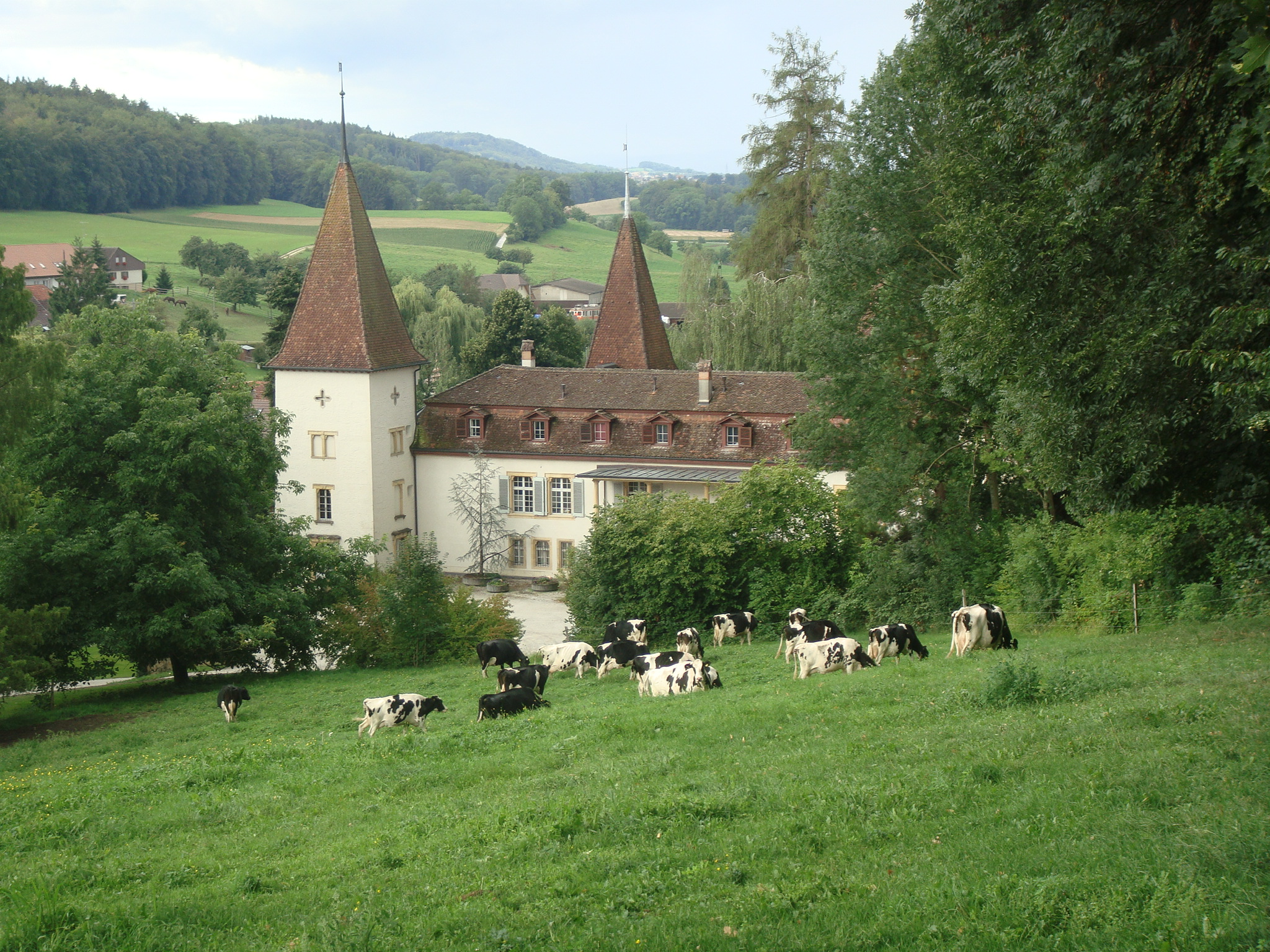
Münchenwiler seminar
Each spring, a weekend seminar is held in the Münchenwiler castle. The seminar provides members of the university with an opportunity of continuing education and self reflection and also provides a platform for developing interdisciplinary and transdisciplinary questioning and skills in teaching and research.
Activism and Engagement – How Far Can the Academy Go?
Friday, May 8 to Saturday, May 9, 2026
When we talk about climate change, pandemics, or the distribution of wealth, many scholars find that their research is relevant to policy and public discourse. While some scholars argue that the scientific community must promote impartiality and objectivity and discourage activism, other scholars advocate specific policies, engage as scientists in political action, and understand their role to include persuading others to believe and act accordingly.
But how far can scholars go without compromising the rigorous standards of science? Can they be advocates of political interests, or should they keep to delivering objective information? How critical can they be without sacrificing science’s aspirations to neutrality? What is objectivity precisely, and how does it relate to broader values? At the Münchenwiler seminar 2026 we aim to discuss the confines within which scientists’ engagement with wider society can be fruitful and legitimate. We have invited speakers from a variety of academic disciplines to reflect on their experience and their self-perception.
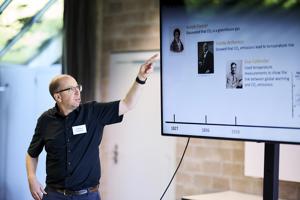
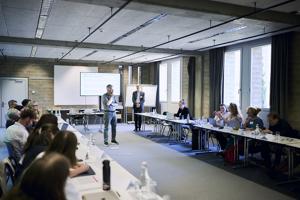
Impressions from the seminar
Program |
Speakers, abstracts, CVs |
|
|---|---|---|
Friday |
||
| 13.30 | Departure by bus from the University of Bern, Hochschulstrasse 4, to Schloss Münchenwiler |
|
| 14.30 – 14.45 |
Introduction |
|
| 14.45 – 15.30 | Activism, Academic Freedom and Politicising Science: a Historical Perspective |
Prof. Dr. Caspar Hirschi, History, University of St.Gallen |
| 15.30 – 16.15 | Overshooting Paris Agreement Limits: Rethinking the Academy’s Role in a Planetary Emergency |
Prof. Dr. Thomas Frölicher, Climate and Environmental Physics, University of Bern |
| 16.15 – 16.45 | Coffee Break | |
| 16.45 – 17.30 | Situated Knowledge as Key Concept: Participatory Research on Gender and Diversity in the Arts |
Dr. Andrea Zimmermann, Interdisciplinary Centre for Gender Studies, University of Bern |
| 17.30 – 18.15 | Holding the Line, But How? Reflections on the (Political) Scientist’s Role in Times of Endangered Democracy |
Prof. Dr. Rahel Freiburghaus, Political Science, University of Lausanne |
| 18.15 – 19.00 | Informal discussions with Apéro |
|
| 19.00 | Dinner | |
Saturday |
||
| 8.00 | Breakfast | |
| 9.00 – 9.45 | Public Anthropology as Critical Postcolonial Practice. Or: How to Relate Academic Knowledge to Social Change |
Prof. Dr. Rohit Jain, Design, Film and Art, Lucerne University of Applied Sciences and Arts |
| 9.45 – 10.30 | The Research-to-Advocacy Feedback Loop: Migrant Women Workers Finding a Strategy between Family, Immigration Authorities and the Courts |
PD Dr. Marion Panizzon, World Trade Institute, University of Bern |
| 10.30 – 11.00 | Coffee Break | |
| 11.00 – 11.45 | Models and Data, Not Activism: Normativity and Restraint in Economics |
Prof. Dr. Dirk Niepelt, Economics, University of Bern |
| 11.45 – 12.30 | How to Deal with Personal Biases in (Animal Welfare) Science |
Prof. Dr. Hanno Würbel, Veterinary Public Health, University of Bern |
| 12.30 – 13.15 | Concluding Discussion |
|
| 13.15 | Lunch | |
| 14.30 | Departure |