
UrbanLab Viererfeld
Science in dialogue for sustainable neighbourhood development
UrbanLab is conducting transdisciplinary and multi-perspective research into how the ecological and social sustainability goals of the city of Bern can be achieved during and after the construction of the new neighbourhood in Vierer- and Mittelfeld. To this end, data from geography, biology, economics and social sciences is being collected. The project also simulates the interactions between the new residential structures and environmental factors. The results and interim findings are intended to provide planners with valuable insights and concrete approaches for the further development of their projects.
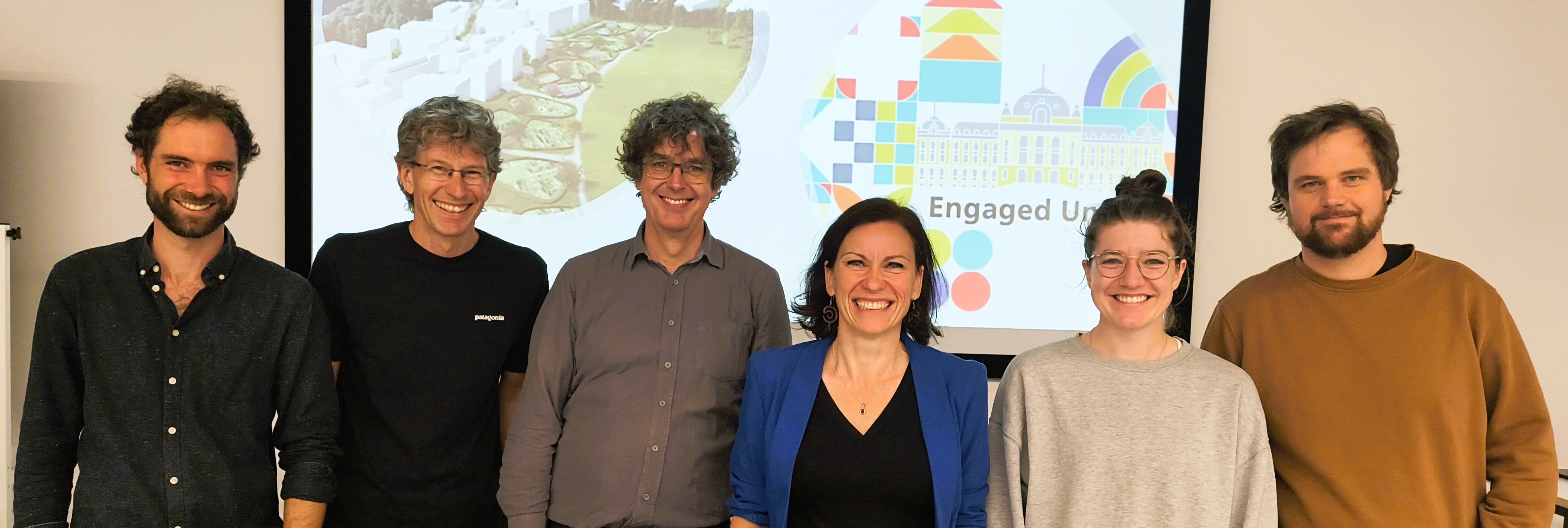
Project Team
Prof. Dr. Stefan Brönnimann*, PD Dr. Jeanine Wintzer*, Dr. Jörg Franke*, Dr. Moritz Gubler*, Prof. Dr. Jean-David Gerber (Department of Geography GIUB), Dr. Apolline Saucy* (Department for Social and preventive medicine ISPM), Prof. Dr. Edouard Davin* (Department of Physics and Wyss-Academy for Nature) (*Oeschger Centre for Climate Change ResearchOCCR)
Partners:
City of Bern: Immobilien Stadt Bern (FPI, Beat Kästli), Tiefbau Stadt Bern/Stadtgrün (TVS, Matthias Aebischer), Stadtplanungsamt/Bereich Freiraum (Stefan Lauber), Amt für Umwelt/Stadtlabor (SUE, Ralf Maibusch, Natalie Schäfer), Gesundheitsdienst (BSS, Denise Felber), Fachstelle Gleichstellung von Menschen mit Behinderungen (Rahel Reinert)
Quartierkommission Länggasse Engehalbinsel (Daniel Blumer)
eawag (Dr. Lauren Cook)
Berner Fachhochschule (Prof. Dr. Pierre Queloz)
Pädagogische Hochschule Bern (Dr. Moritz Gubler, Dr. Matthias Probst, ), Gymnasium Neufeld (Georg Bill)
Contribution to Sustainable Development
The Viererfeld-Mittelfeld urban development project aims to create a sustainable and liveable urban district. The development project is therefore aligned with the City of Bern's sustainable development framework strategy RAN2030. This strategy incorporates the objectives of Agenda 2030 and the UN Sustainable Development Goals (SDGs) and is based on the triad of ecological (climate protection, climate adaptation, dealing with contaminated soil), social (e.g. health) and economic sustainability (e.g. non-profit housing construction and investors). The accompanying research must therefore be broadly based and holistic in order to analyse the effects of these measures. The project will thus provide valuable experience for further urban development projects. Thanks to an ongoing project in collaboration with the Association of Municipal Infrastructure and the Association of Swiss Cities, the experience can also be shared with other Swiss cities.
The UrbanLab Viererfeld is a project of Engaged UniBe.