
New UniBE Venture Fellows start their projects
Promoting animal health, tightening heart valves, and ensuring state-of-the-art materials and energy research: The latest recipients of the Venture Fellowship at the University of Bern and the Inselspital, bring new hope into cancer care for dogs, improve surgery results, and support high-intensity neutron beam research.
The fellows in the fifth cohort of the Venture Fellowship program at the University of Bern will start their Fellowships in the coming months with the goal to transfer knowledge and novel technologies into economy and society. They were chosen out of 21 applicants who applied in December 2025.
Rémy Boisgard: Cerberis – Effective canine cancer therapies
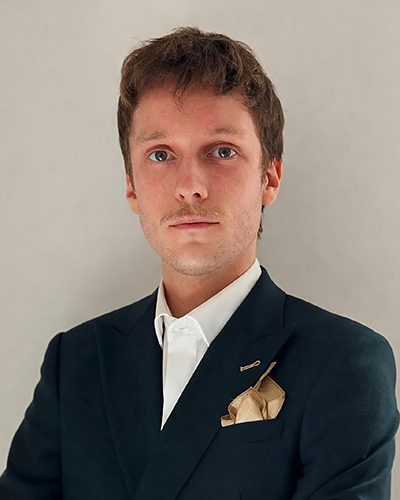
While immune therapy is quite advanced in human oncology, many aggressive forms of cancer in dogs lack effective and safe treatment options. At the Department of Clinical Research and Veterinary Public Health, Vetsuisse Faculty, University of Bern, Rémy Boisgard has translated mechanisms to reactivate human immune defense against cancer to a dog-compatible variant with Cerberis (“Canine Engineered Receptor Blocker for Enhanced Reactivation of Immune Surveillance”).
The project aims to offer an efficient therapy option against canine cell and bone tumors and to extend the time we can spend with pet dogs. As a next-generation therapy Cerberis’ therapeutic agent restores the natural ability of the immune system to detect and eliminate cancer in dogs. The Fellowship will enable Cerberis to advance its innovative mechanism from laboratory validation to clinical proof-of-concept.
Lukas Glaus: TightValve – measuring valve leakage during heart surgery
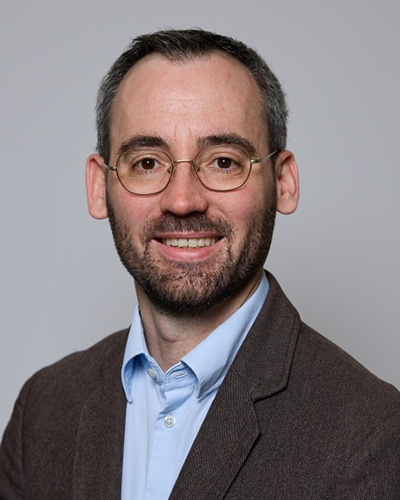
When a heart valve becomes leaky, a surgeon can either replace it with an artificial valve or reconstruct it. The reconstruction is better for the patients as it uses their own tissue, and patients do not need to take blood-thinning medication after surgery. Currently, heart surgeons lack a reliable way to check the tightness of a repaired valve already during the operation. This may make readjustments necessary, leading to longer operations, and thus, increasing the perioperative risks for patients.
The physician and mechanical engineer Lukas Glaus and his team from the UniBE spinoff TightValve aim to make aortic valve surgery safer. TightValve is a device that measures leakage after aortic valve reconstruction directly during the surgery so that issues can be addressed immediately. This technology could reduce patient risk, prevent avoidable corrections, shorten surgeries, and lower healthcare costs. With the Fellowship the project will allow a first-in-human proof-of-concept and the development of an IP, regulatory, and QMS strategy.
Gjon Markaj: Next-generation fast, high-efficiency neutron detector
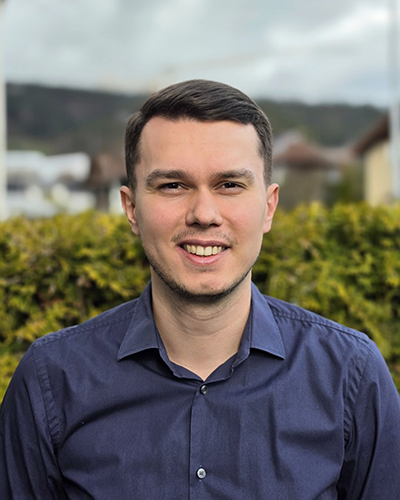
Neutrons are widely used to advance research in materials science and fundamental physics, as well as to support applications in the energy and security sectors. However, many existing detector systems struggle with the intense beams produced at modern facilities. This project aims to turn the neutron detector, developed by Gjon Markaj and colleagues at the Albert Einstein Center for Fundamental Physics at the University of Bern, into a practical device for laboratory use.
Key advantage of the new detector is its ability to maintain stable performance beyond the capabilities of many existing technologies. Its modular layout aims to adapt to different facility needs. The UniBE Venture Fellowship will support refining the design of the prototype and its evaluation with future users and customers. The goal is to create a reliable detector system that enables more demanding experiments and forms the basis for a future commercial product.
VENTURE FELLOWSHIP
The Venture Fellowship Program at the University of Bern
The Venture Fellowship Program at the University of Bern enables young researchers each year to continue their translational research for one year. The program aims to assess the technical feasibility (Proof-of-Concept) of their projects and prepare for their subsequent commercialization. The Innovation Office at the University of Bern supports them with consulting, mentoring, and networking, in cooperation with be-advanced – the startup coaching platform of the Canton of Bern. The fellowships, each endowed with CHF 100’000, are jointly funded by the University of Bern, the ARTORG Center for Biomedical Engineering Research, and the Inselspital. In addition, the Swiss Federal Institute of Intellectual Property (IPI) supports the program.