
From Incorporation to Exit: Carlos Ciller shares insights on building RetinAI / Ikerian
It all began during their joint PhD studies and with a few algorithms capable of analysing optical coherence tomography (OCT) scans of the back of the eye. Today, the medtech company led by a three-person founding team is one of the largest providers of AI-approved algorithms for ophthalmology under the MDR, with access to the US market. Following its acquisition by EssilorLuxottica, it now plans to play a key role in shaping the global ophthalmology and oculomics market.
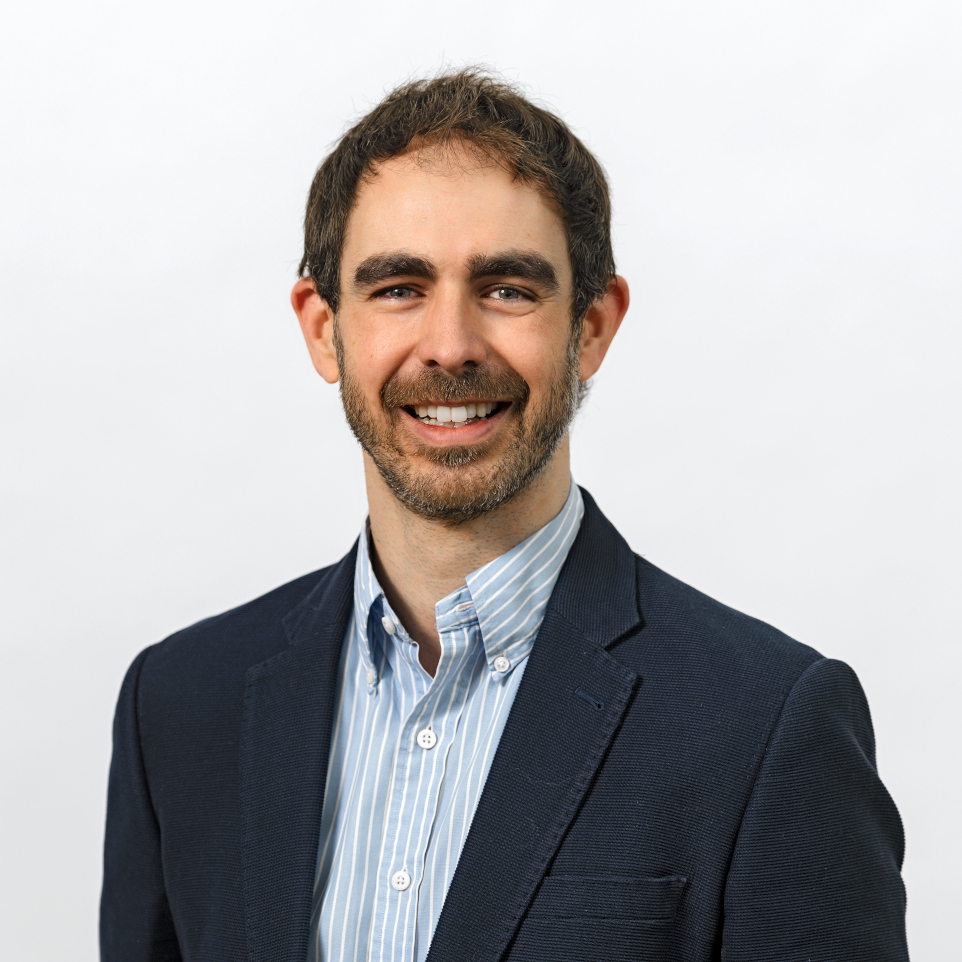
Carlos, what is the story of RetinAI and Ikerian?
We founded the company as three PhD researchers because we saw that new AI technologies could still not be used efficiently by the people who needed them most. Rather than letting our thesis end up only as a peer-reviewed paper sitting in a library somewhere, we wanted to create real impact and said: Let’s use AI to break these digital barriers that separate patients from the best software solutions available to support them.
Although we developed the core technology early on - AI algorithms that analyze medical data to support treatment decisions – we also needed a platform to run it on, we needed a real wrapper around our algorithms. That’s how we started with RetinAI in 2017. At the end of the first year, we got our first seed investment and started growing the team. As we won customers early, we closed our first year already generating small revenues.
We grew the company to where it is today, with six certified medical devices on the market, one under FDA and five under EU MDR regulations. As of May 2026, we are one of the largest holder of AI-approved algorithms for eye care under MDR in Europe. It’s this impact we strive for: Putting the technology to work to support hundreds of millions of patient visits.
And how was Ikerian born?
When we realized in 2023 that we wanted to move even beyond eye care into oculomics, we developed another brand that could encapsulate our dream and expansion into other therapeutic areas: Ikerian. This came as a response to the growing opportunity we saw of using the technology stack that we had built to assess and understand systemic and chronic disorders, such as Alzheimer’s, Parkinson’s, multiple sclerosis, cardiovascular disease, and metabolic and autoimmune disorders.
Both application areas – eye care and using the eye as a “window to the body” – are of central interest for EssilorLuxottica, who acquired Ikerian and RetinAI US as of 15 October 2025. We have now finished chapter 1 of our journey as a startup and we start chapter 2 with Essilor Luxottica, with a shared vision to empower humans and eye care providers. To that end, we are becoming the AI center of excellence in eyecare for the group – and in this new role we can broaden our impact in eye care and beyond.
What are your company’s goals and vision?
RetinAI / Ikerian exists to enable the right decisions sooner in healthcare. We enrich data with our AI algorithms, organize it, and bring it to the decision maker who can immediately act on these insights and e.g. bring a risk under control or get additional input on a patient that they may have in front of them. This is especially valuable in early stages of eye diseases, to provide therapies that can slow them down and improve quality of life. As we compound this across the entire spectrum of healthcare decision making, we add value across the board, and we hope this improves disease understanding and patient outcomes.
Our contribution to the process of decision making is divided into 4 key pillars:
- We detect the presence of absence of specific biomarkers (disease or health)
- We optimize the process of decision making
- We expedite the speed at which decisions can be taken and clinical collaboration
- We accelerate the process of developing new patient pathways for treatment.
It’s a cycle – and that’s the vision.

Which major challenges did you have to face (and how did you overcome them)?
The first one: We were always running out of money. That is a feeling that always travels with you, wherever you are as the CEO or a co-founder of a company. You are running out of money – until the moment that you generate more money than your startup is burning. For some people, this is constant stress. And you either survive it or it can weight on you heavily and eventually ‘kill you’. You are in this constant pressure of building a company, controlling spending, selling, … – and at the same time you are fundraising.
Healthcare is also a complex field. I’d say it takes about double the time to show results than in other fields of business. Further, it doesn’t get easier as you grow. It’s only that the stakes get higher. And it’s you as the entrepreneur that needs to grow in the process. Your perspective changes simply because you learn to live with your decisions having more impact on the company or on more people.
In a journey of decisions, one of the hardest things we had to do as a company was a company reorganization. That was very tough because we were going through a difficult financial period – I felt that some part of me never recovered, but it had to be done for us to be able to continue existing as an organization. That was a hard lesson to learn, control your growth and costs or it could be your demise as a company.
I think the only reason why we survived this period was that we as the founding team had each other’s back. We had three mantras: (1) We don’t give up. (2) We don’t bend / We are ready to lose it all - because like this, you control your destiny, whatever that may be - and (3) We will endure; we have this fearless optimism: If you fail, at least you did your best, and there are no regrets.
Believe in what you do because if you don't, why should anybody else?
Is entrepreneurship a journey everyone can master?
There is a romanticism to entrepreneurship which does not represent the full picture – it’s not for everyone, not everyone should try because the stakes could be too high.
In general, we need to be aware of the stakes: Entrepreneurship is not just you; it’s also your immediate personal environment. Because your family, your partner, friends … are going to bear the consequences of everything you are giving up due to the dedication it requires. You need to be very clear on where you draw the lines. Are you ready to do whatever it takes? Are you willing to sacrifice your private life? – because it may require you to do that.
In my personal case, I was able to manage, but it was not easy. For four years, I didn’t have a single day of holidays. Holidays are not something that entrepreneurs can afford unless you are willing to take the risk that it may cost you the company. In my opinion, entrepreneurship is unfortunately not about work-life balance. This is something that you need to understand early on. You can’t be an entrepreneur nine to five; it doesn’t work like this.
How did and does the University of Bern environment help entrepreneurs?
Entrepreneurship is mostly becoming – not being born. That’s the reason why you shouldn’t go all in without knowledge and why programs such as Innosuisse are here to protect you. I remember Venturelab courses as a fantastic training – it shows you the reality of being an entrepreneur. And then you can decide if it is a journey for you.
For the University of Bern, the entrepreneurial support is evolving in the right direction. You have the right actors in place and need to support them to operate.
For us as an UniBE spinoff, we are happy to support the next generation of entrepreneurs. There are committed people from institutions to support and specialized advisory, but you also need to have people (such entrepreneurs) who ‘made it’ to ask for their advice and to support you – even if it’s just a fraction of their time.
Which are your most important learnings?
First, have fun! You need to be ready to fail but that’s okay, have no regrets. Nobody is going to take away who you are and what you learned if you do, so be ready to fail, start over and enjoy the ride!
Listen to what people are telling you and what they are not telling you (e.g. understanding the real reason why a customer will not fund your product, invest in your company, …).
Be good at what you do and be ready to show it.
Believe in what you do because if you don’t, why should anybody else? If you don’t communicate and exhibit what you do, people will not know that you exist.
Follow the money. This may sometimes imply pivoting your company in a new direction.
And then: Get the right people to support you. Go to the key opinion leader in your field and get them involved in your initiative. You may have more supporters than you think if you commit to your own journey. Sometimes you just need to try.
You might also like to read:
Carlos Ciller on how investors want to invest in your company (Venture Leaders)
| Name | Founding Year | Sector | More about the Startup |
|---|---|---|---|
| RetinAI Medical AG | 2016 | Medtech |