
“Our work could one day save lives”
A breakthrough discovery during her PhD has motivated Hang Gander-Bui to develop a drug compound that could become a game-changer in combatting fungal sepsis. Instead of fighting the fungus, the immunologist with a specialization in infectious diseases plans to reset the body’s own immune system to fend off the deadly infection.
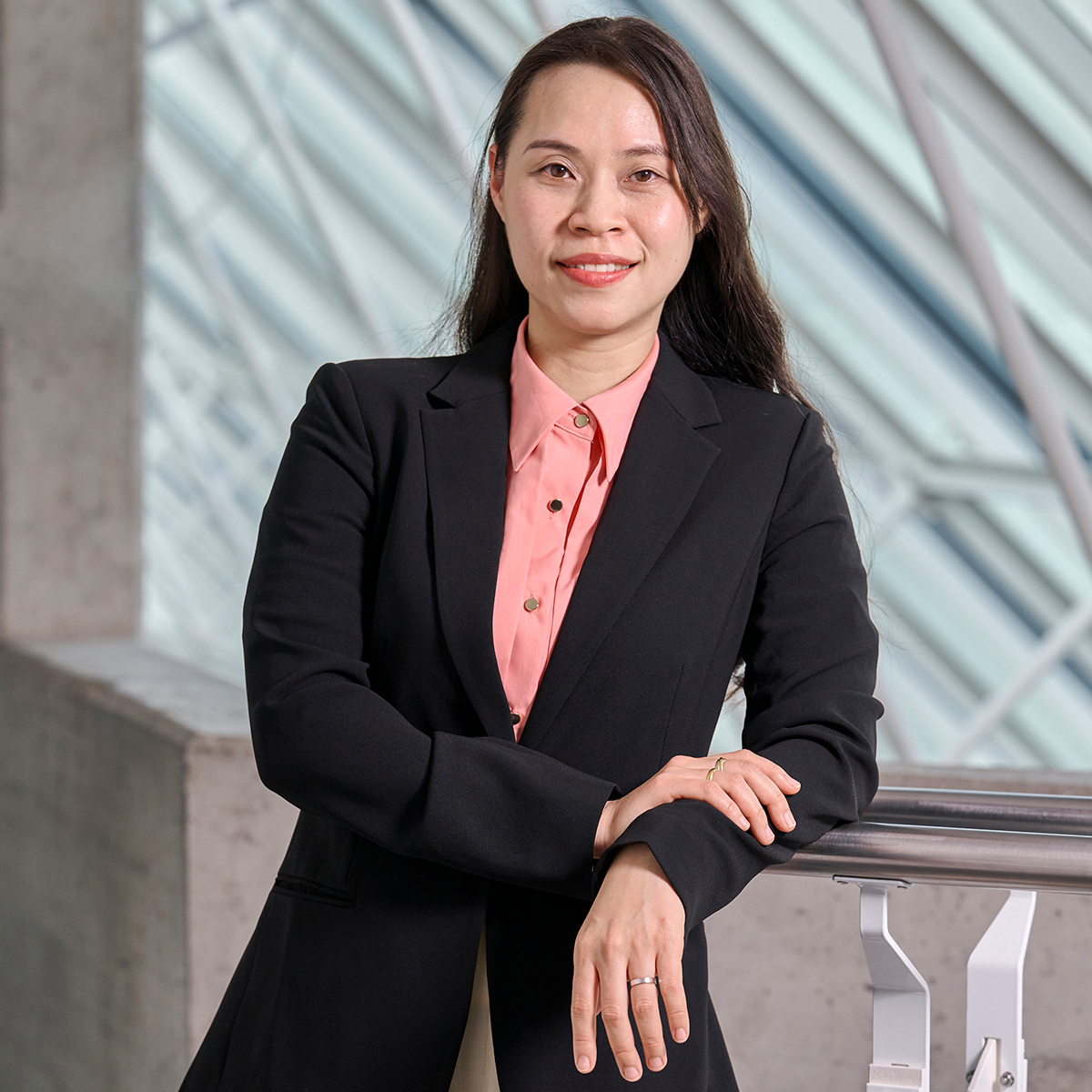
Factsheet
| Name | Hang Gander-Bui |
|---|---|
| Project | Immune checkpoint-targeted therapy for fungal sepsis |
| Expertise | PhD in Immunology |
| Place of Work | Institute for Tissue Medicine and Pathology (ITMP), University of Bern |
Fungal sepsis can affect anybody with a weakened immune system. With a mortality rate of up to 60%, it is responsible for an estimated 2.5 million global deaths per year. Current therapy targets the fungus itself but suffers from antimicrobial resistance and low effectiveness. With her team, Hang develops a totally new approach that resets the paralyzed immune system, so it can effectively fight the fungus.
Hang Gander-Bui, what impact does your project aim to have? Fungal sepsis remains an unsolved and urgent medical problem. The mortality rate is still very high. Current antifungal drugs often do not work well anymore because of rising antimicrobial resistance; and have toxic side-effects for humans. There have been many unsuccessful trials testing immune-based therapies. In sepsis, the immune response is strongly dysregulated and shows overactivation and immunosuppression at the same time. It is very complicated to try to correct this state. If a therapy interferes at the wrong time or in the wrong way, it could cause serious problems, for example by increasing organ damage due to hyperinflammation. During my PhD, I discovered that fungal infection activates so-called immune checkpoints (control mechanisms of the immune system) to hinder the function of neutrophils – the critical first defense against infections. In our preclinical studies, blocking such immune checkpoints restored the neutrophil defense and improved survival. Our experiments showed that this approach not only boosts anti-fungal immune defense but can also limit the damaging hyperinflammatory response. So, unlike current approaches focusing on treating symptoms of fungal sepsis, our strategy targets its roots. I think that this could really help at-risk patients, like cancer and transplant patients.
What inspires you? When testing our new therapy in pre-clinical models, we found that it not only restarted the immune response but actually helped the infected host to survive. Seeing such strong effects was very exciting and keeps me fascinated by this project. It is one thing to have an idea in the lab, but it is another to see it affecting the outcome of such a severe disease in real life. What really drives me is knowing that every experiment teaches us something new and brings us closer to helping patients. The ultimate goal is not just to understand how the therapy works, but to develop our discovery towards a drug candidate that can be used in hospitals. This possibility – that our work could one day save lives – is what makes the effort worth it.
What is the status of your innovation? During the Venture Fellowship period I am developing our lead compound from a library of promising drug candidates. Based on our initial in vitro and in vivo characterization, we will then select one final candidate to perform a comprehensive validation in several pre-clinical sepsis models. These experiments will be essential to obtain proof-of-concept and prepare for future IND*-enabling studies.
* IND = Investigational New Drug
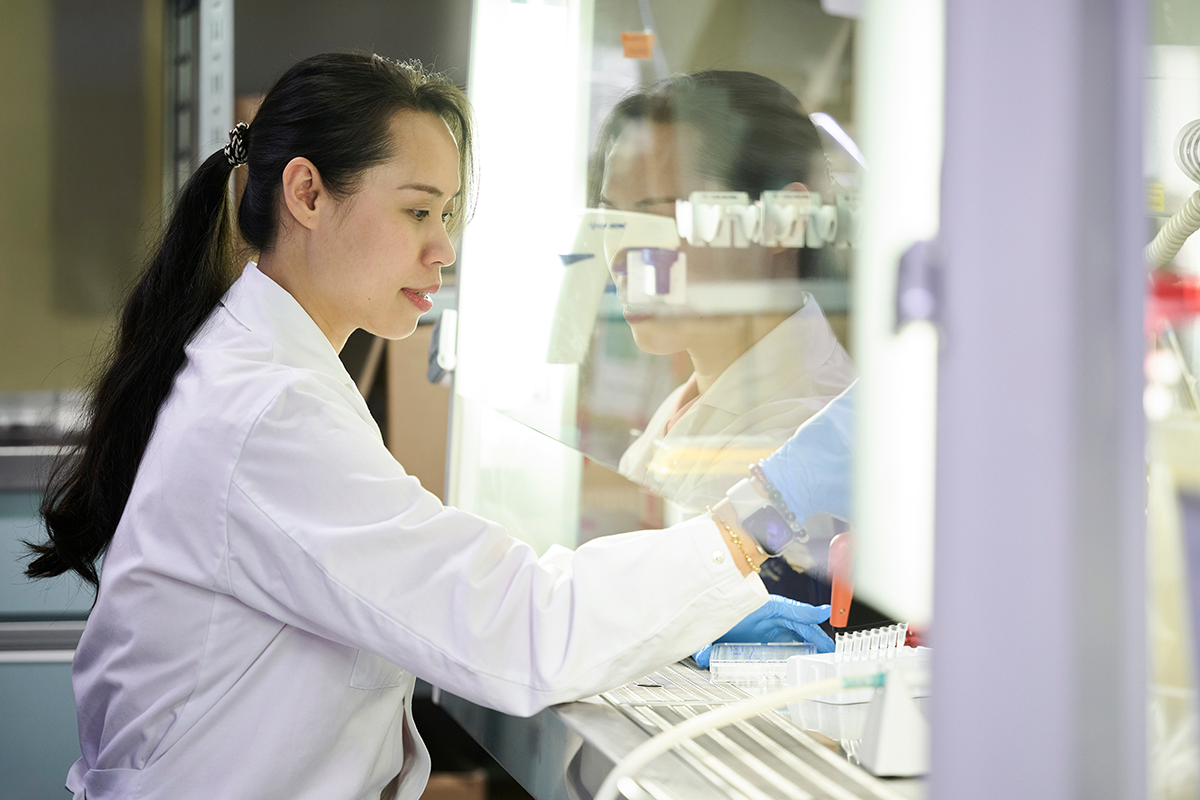
How does the UniBE Venture Fellowship help you achieve your goal? I am very grateful for the Venture Fellowship. It has really been a turning point for my project. It allows our team to generate the first prototype and generate proof-of-concept data – something that would have been very difficult to achieve in this short time otherwise. Even more so, the biggest help has been the personal support I receive as a Venture Fellow. Having the Innovation Office and my mentor in my corner is incredible. I have had many questions – related to business or legal aspects that I am not familiar with as a scientist – and I always get an answer. That kind of support gives me confidence that we have a chance to translate our work from the lab to the clinic. I really am just so thankful for that.
Any recent learning on your way you wish to share? If you are a researcher without a business background start thinking about the 'translation' – how your work can become a product – much, much earlier than you think. Then: Stay close to your mission and purpose. Because during the journey, you will experience a lot of uncertainty. But as long as you stay focused and try hard, you have a good chance of success. One key lesson I’ve learned is to talk to people outside my immediate research area – not just other scientists, but also other founders and entrepreneurs, even if they work in software development or engineering. You may not share the same science, but you will face similar challenges, and their perspectives can be incredibly valuable. I started out purely as a scientist, but then I realized that we had discovered something that could truly help patients. From that moment, I knew I wanted to bring it forward – to see our work used in hospitals and save lives. That impact will be the most meaningful reward for the years of research we’ve invested.
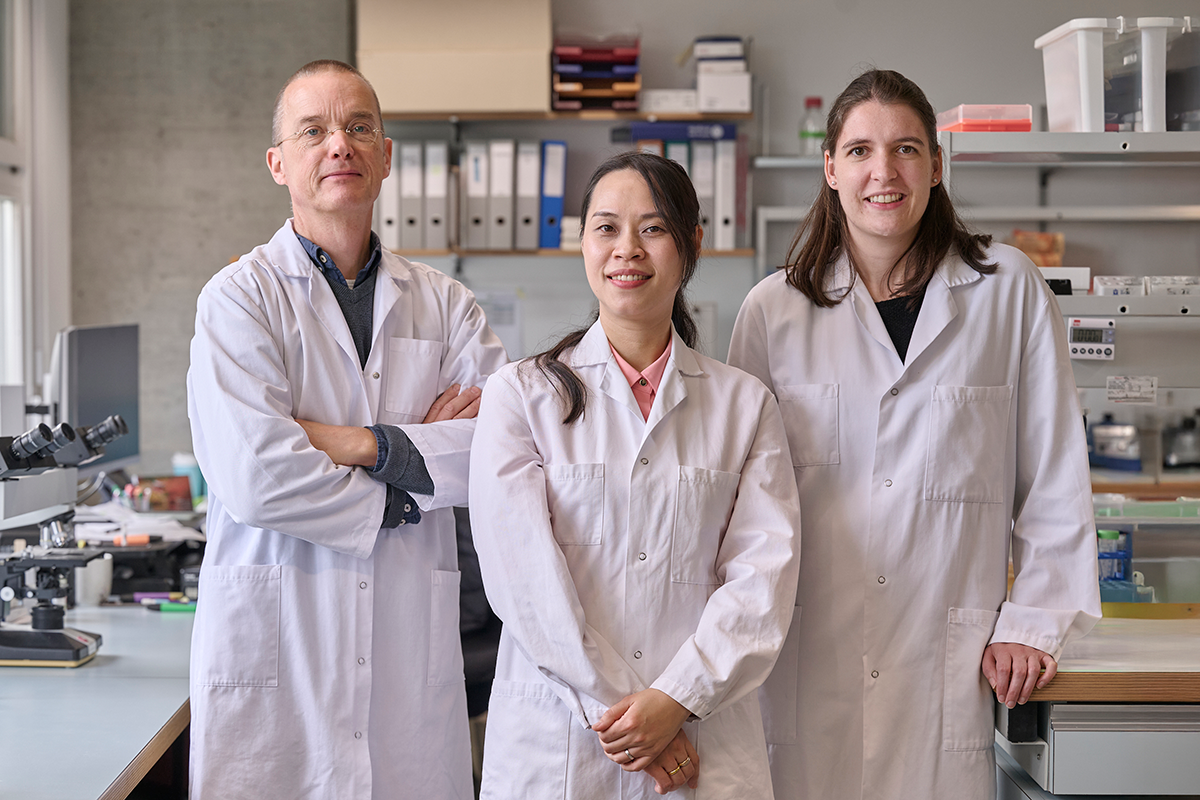
Venture Fellowship
The Venture Fellowship Program at the University of Bern
The Venture Fellowship Program at the University of Bern enables young researchers each year to continue their translational research for one year. The program aims to assess the technical feasibility (Proof-of-Concept) of their projects and prepare for their subsequent commercialization. The Innovation Office at the University of Bern supports them with consulting, mentoring, and networking, in cooperation with be-advanced – the startup coaching platform of the Canton of Bern. The fellowships, each endowed with CHF 100’000, are jointly funded by the University of Bern, the ARTORG Center for Biomedical Engineering Research, and the Inselspital. In addition, the Swiss Federal Institute of Intellectual Property (IPI) supports the program.