
"I am grateful to be part of a dynamic community of innovators.”
Planning a radiotherapy is a complex process with multiple iterations, resulting in patients having to wait for the therapy to begin. With his project, Amith Kamath aims to both speed up the process and enable treating physicians to track and quantify radiation effects of contouring, ensuring maximum safety and efficiency. At the University of Bern, he finds a very supportive environment for achieving this goal.
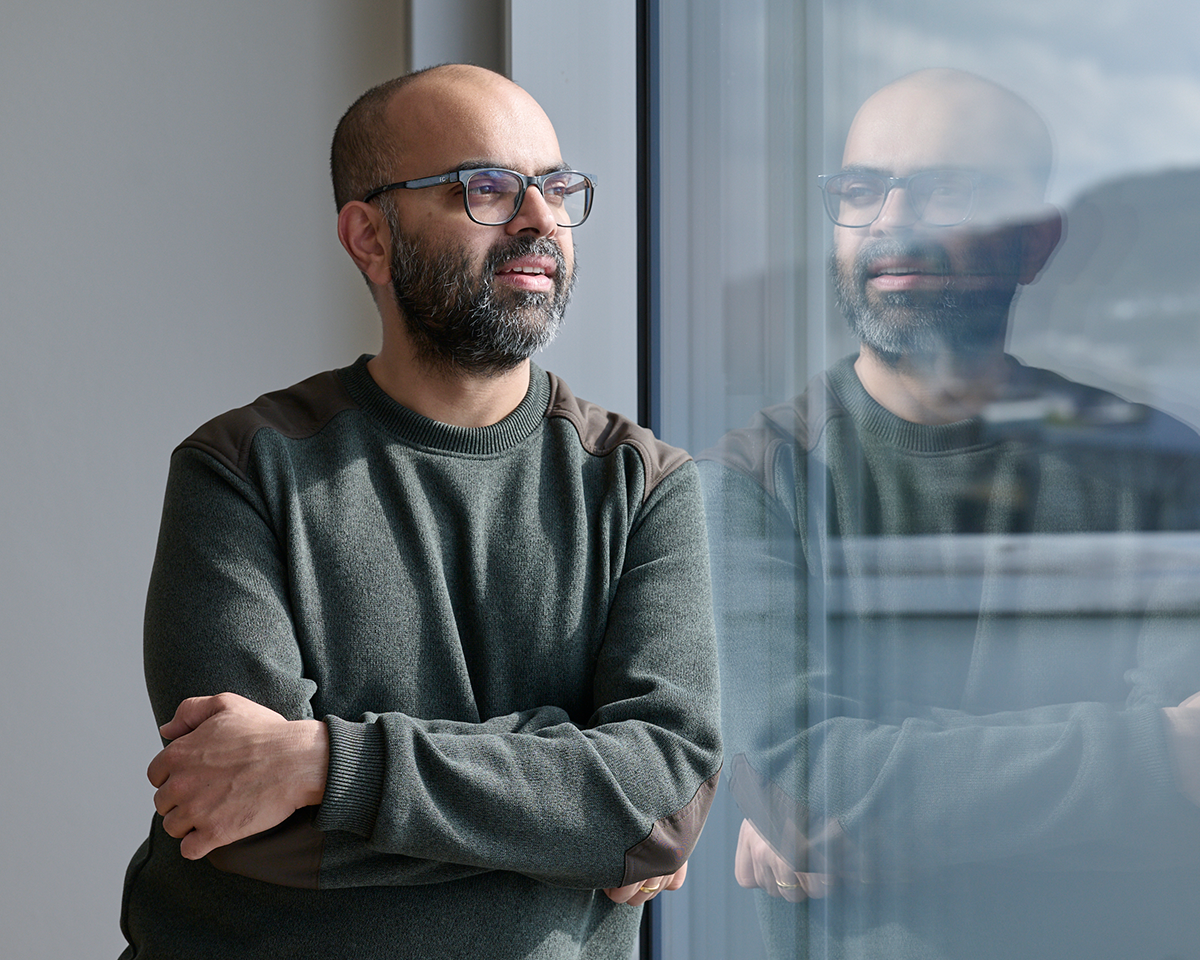
Factsheet
| Name | Amith Kamath |
|---|---|
| Project | ContourAId |
| Expertise | BTech Electrical Engineering, MS Computer Science, PhD Biomedical Engineering |
| Place of Work | Medical Image Analysis, ARTORG Center for Biomedical Engineering Research |
Planning radiation therapy is time-consuming and prone to errors. ContourAId is a tool for increasing the efficiency of contouring (defining tumor boundaries and radiation dose for the patient). It assists physicians in assessing the impact of contour deviations on the dose, particularly depending on their proximity to sensitive organs. The overarching goal is fast and reliable radiation therapy planning.
Amith Kamath, how do you plan to impact the medical workflow? Today, anyone needing radiotherapy (about 250’000 people per year) waits for up to a week to start treatment. This is because the treatment planning must undergo multiple steps: First, a radiation oncologist draws contours by hand for the tumor and the healthy organs (on a 2-dimensional image; in some hospitals, assisted with AI). Next, a senior radiation oncologist assesses contour quality. Once approved, a medical physicist must calculate the radiation dose in 3D that can be delivered by the scanner available in the hospital. Their task is to maximize the dose on the targets (the tumors) while minimizing the dose as much as possible in healthy tissues, such as the eyes or ears. The result of this task is a treatment plan. With ContourAId, our objective is to empower radio oncologists with time-effective and informed decisions, enabling them to incorporate clinical information into the contouring process. Our hope is that this system enhances efficiency and communication, allowing for faster and more effective therapy planning. Depending on the kind of tumor, postponing the treatment start could allow the tumor to grow. If the entire process can be expedited, the treatment would be more effective.
Where do you get your inspiration from? It is important to me not to just write papers and have them gather dust on a bookshelf. Building something useful for clinics inspires me. I come from a family of medical doctors, and I value providing engineering inputs to make their workflow easier. I also draw inspiration from the community of innovators and am grateful to be part of it. The Medical Image Analysis group at ARTORG Center and the University of Bern has a storied history of spinoffs making impactful clinical products. My advisors say it this way: “If I hear from one patient that our work helped, that means more than just academic citations.”
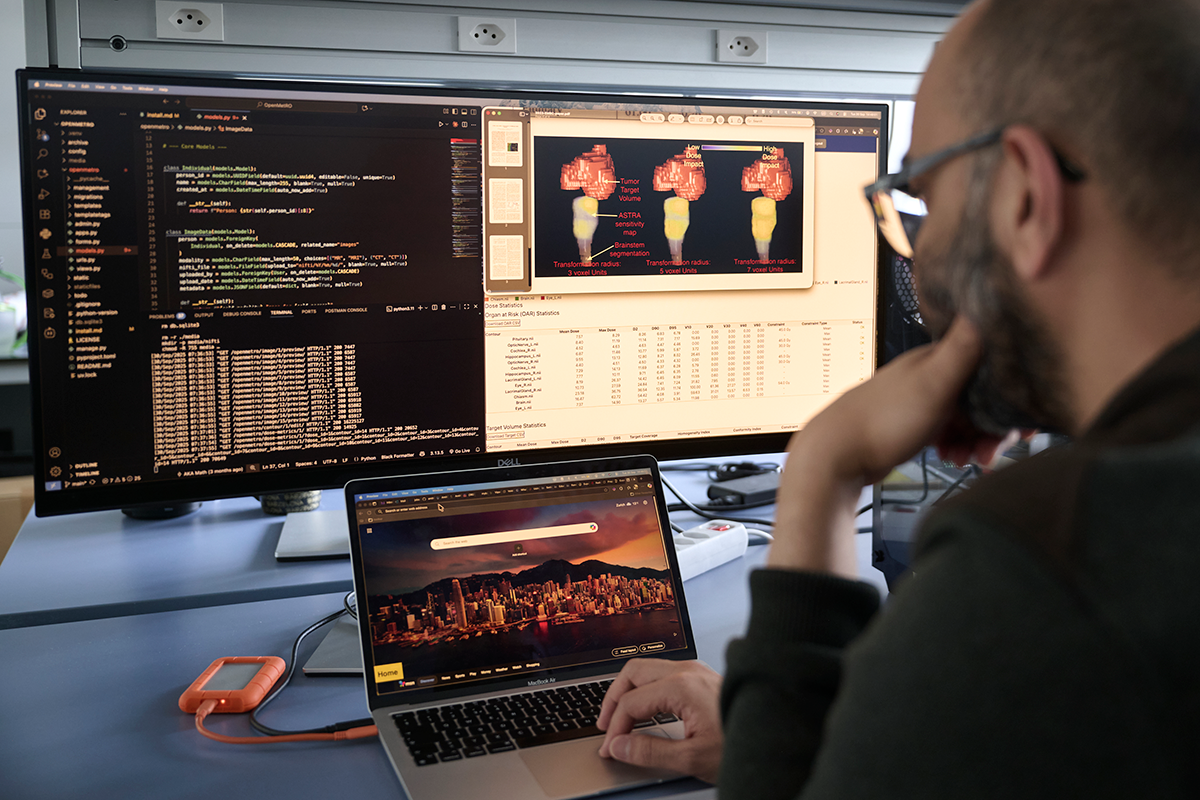
What is the status of your innovation? On the technical side, we are currently building the minimal viable product to conduct a first round of validation with our clinical partners. Our plan is to iterate quickly with them to test the problem-solution fit and the usability of our design. At the end of the fellowship, the goal is to have a version of our tool that clinicians would accept for daily use. On the business side, we would like to secure additional funding and expand our team. Exploring the regulatory pathways with the assistance of a dedicated team here at ARTORG Center is also on the agenda. We also plan to hold regular symposia on AI in radiotherapy (the first “BART” took place in spring 2025) to foster a strong community of practitioners and enthusiasts in this field.
How is the UniBE Venture Fellowship supporting you in this journey? The fellowship gives me the freedom to go beyond pure academic research and focus on real-world impact. As an entrepreneur-in-training, it extends our runway and grants us time to explore strategic directions with less pressure. Additionally, the network of Venture Fellows is also highly valuable. We exchange notes on further funding opportunities and how to navigate this transition together. Additionally, two fellows from last year won the BRIDGE Proof of Concept award. Having these role models to follow and the possibility to learn from them is valuable. Being part of this thriving ecosystem, the personal coaching and the interactions with Unitectra and the broader community are all big pluses.
Do you have any recent learnings you’d like to share? Most of us who come to this program are academic researchers. The transition to thinking about building a startup is a steep curve. Building a product that is not necessarily academically interesting, but is best suited to the market, is a non-trivial task. With the Innovation Office, the ARTORG Center, and sitem-insel, we have a great local environment to translate research. Be connected to all these people and help one another progress in your projects! For me, other startups at the ARTORG Center were happy to share their experiences and learnings with regulatory steps or pitching. I also completed the Innosuisse course during the second year of my PhD and became involved in the translational medicine master’s program, which I can highly recommend, as it led me to the Innovation Office. The learning for me broadly is to keep one’s eyes open and network mindfully.
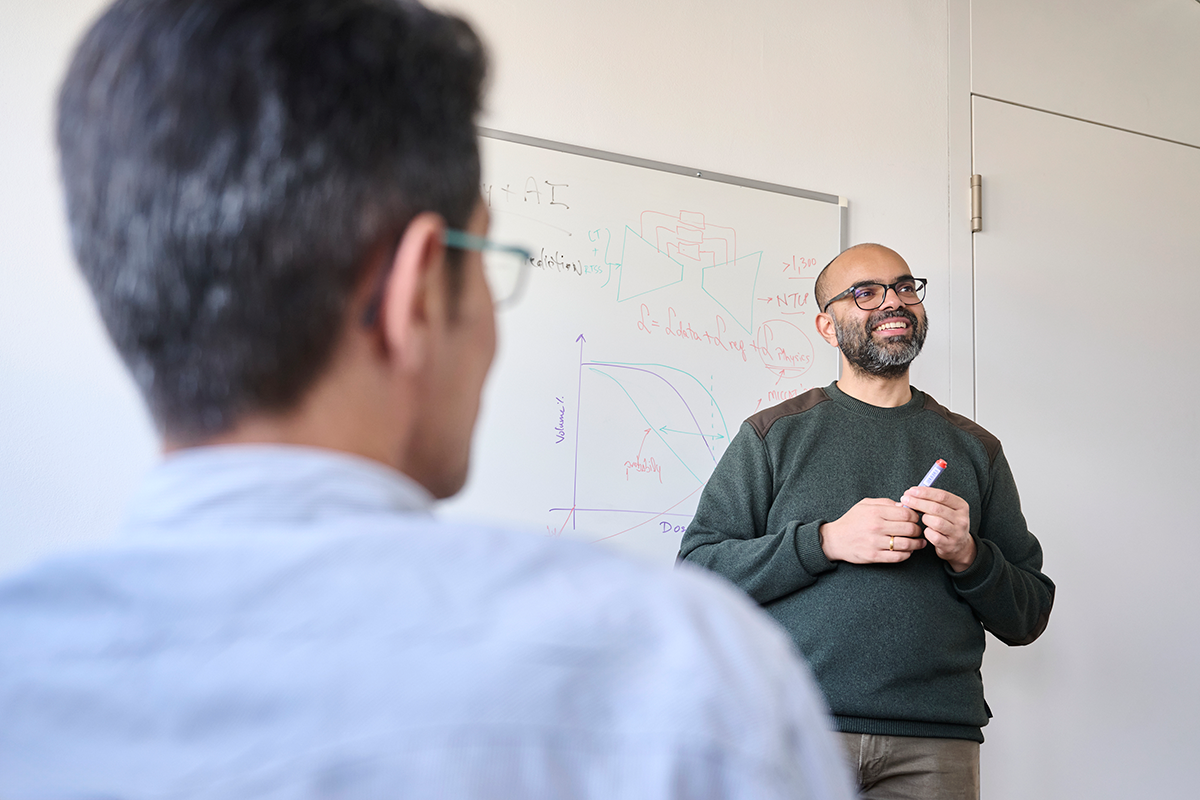
Venture Fellowship
The Venture Fellowship Program at the University of Bern
The Venture Fellowship Program at the University of Bern enables young researchers each year to continue their translational research for one year. The program aims to assess the technical feasibility (Proof-of-Concept) of their projects and prepare for their subsequent commercialization. The Innovation Office at the University of Bern supports them with consulting, mentoring, and networking, in cooperation with be-advanced – the startup coaching platform of the Canton of Bern. The fellowships, each endowed with CHF 100’000, are jointly funded by the University of Bern, the ARTORG Center for Biomedical Engineering Research, and the Inselspital. In addition, the Swiss Federal Institute of Intellectual Property (IPI) supports the program.